OLD IRONSIDES
Acreage: 0.51 Acres
Address: 2404 Frederica Road
Hours: Daily, Sunrise to Sunset
Activities:


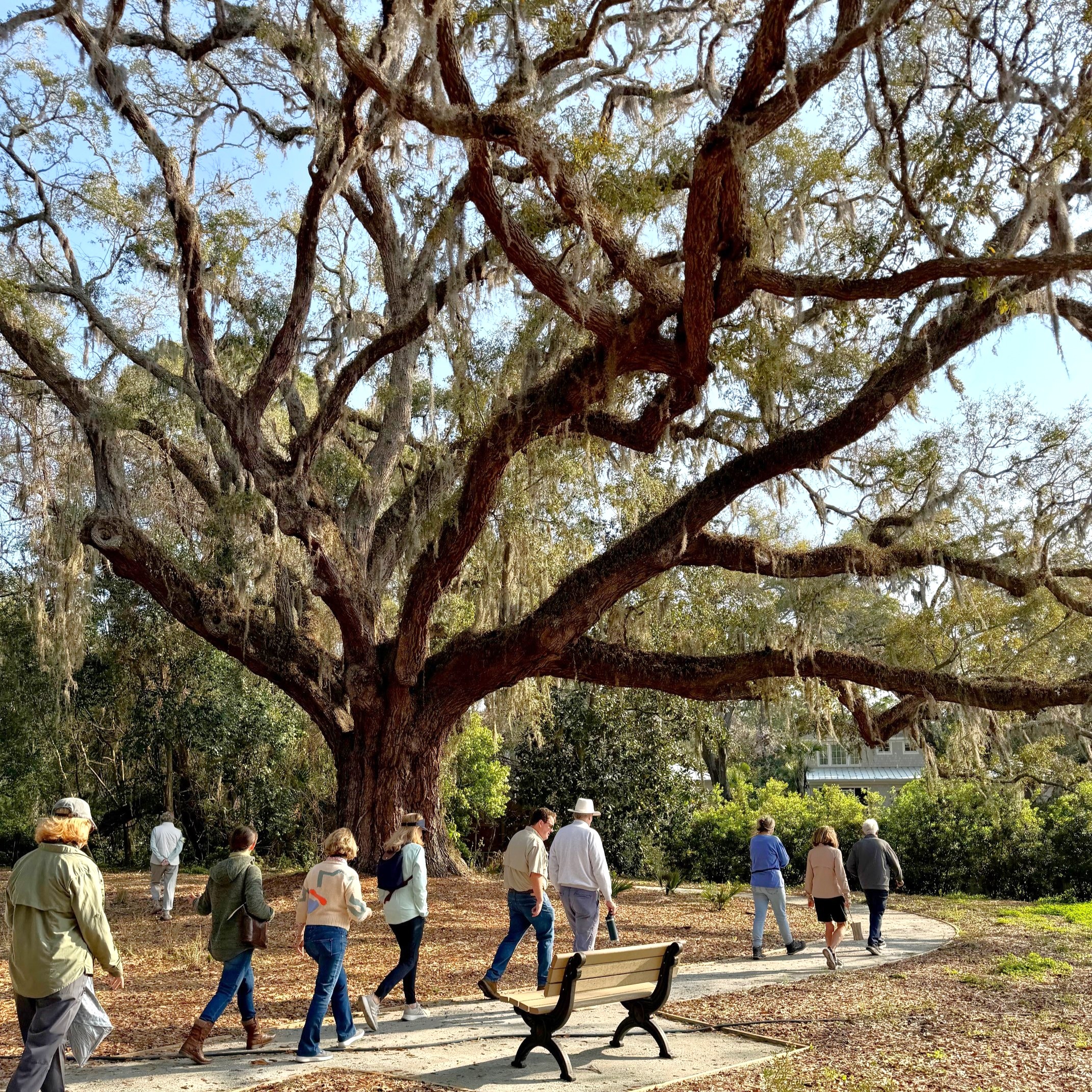
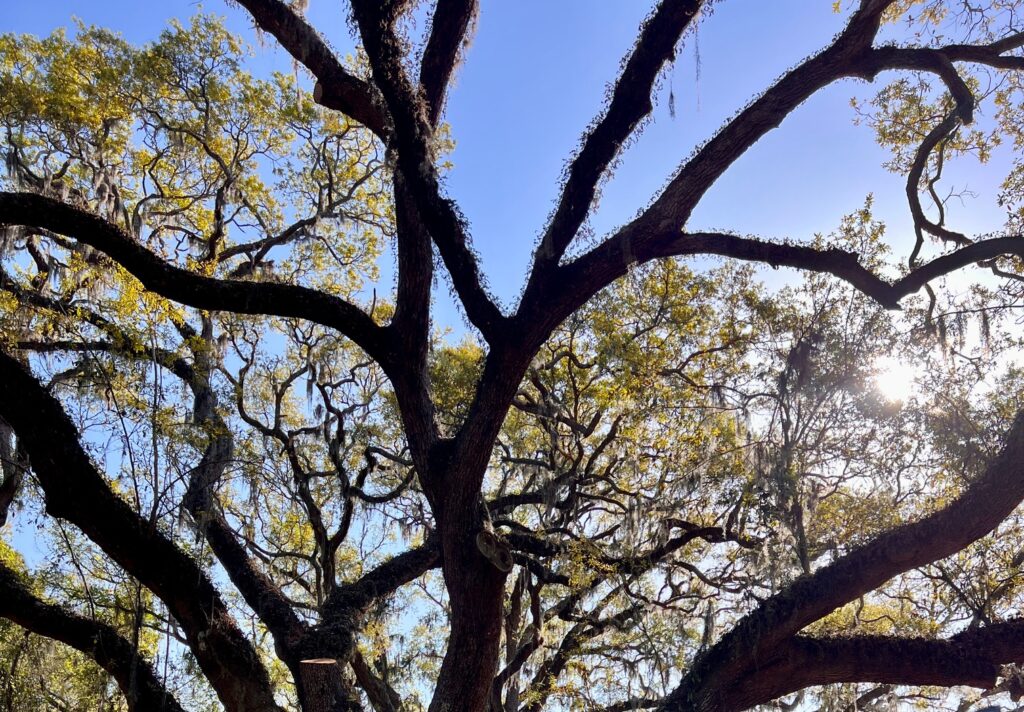
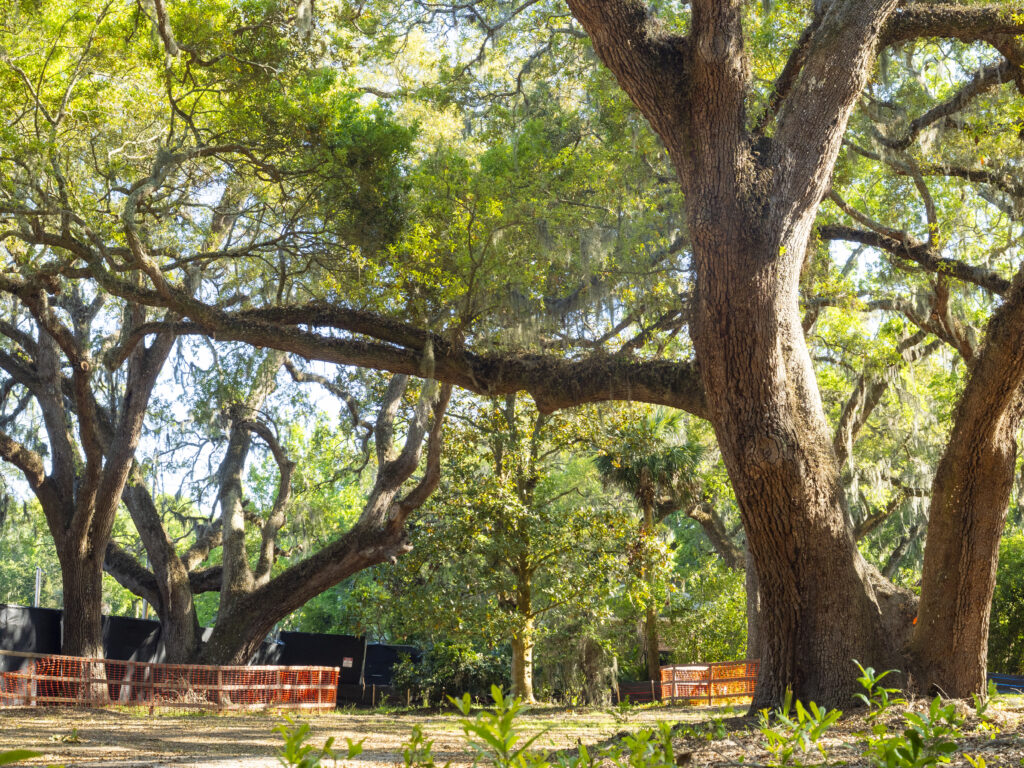
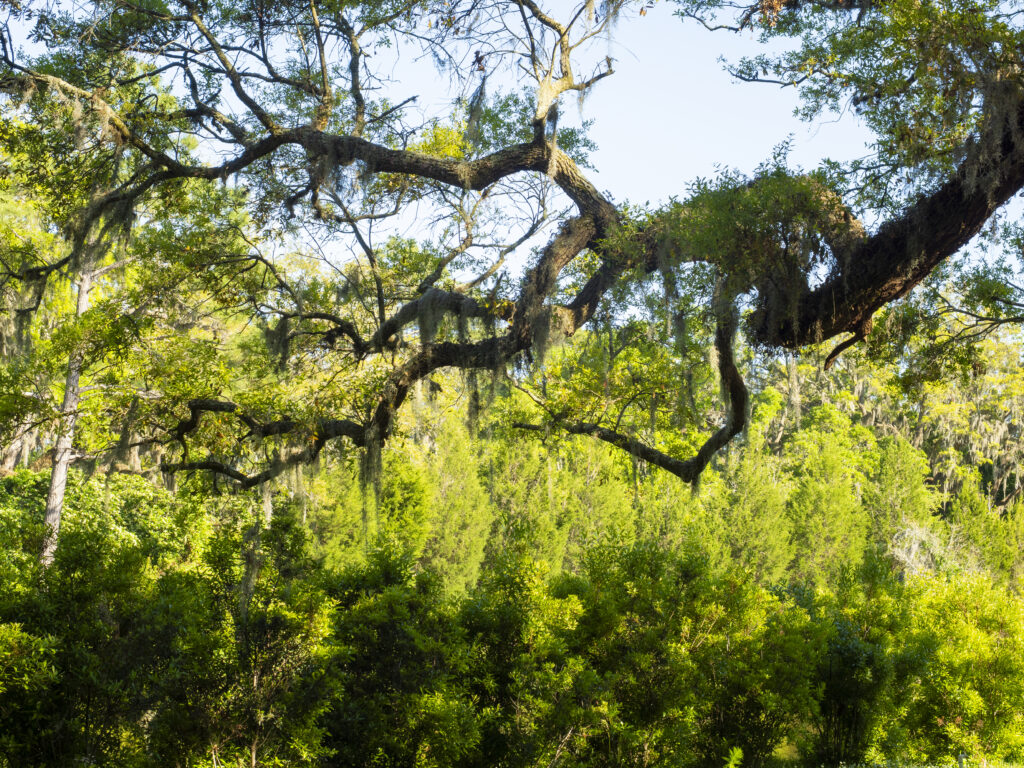
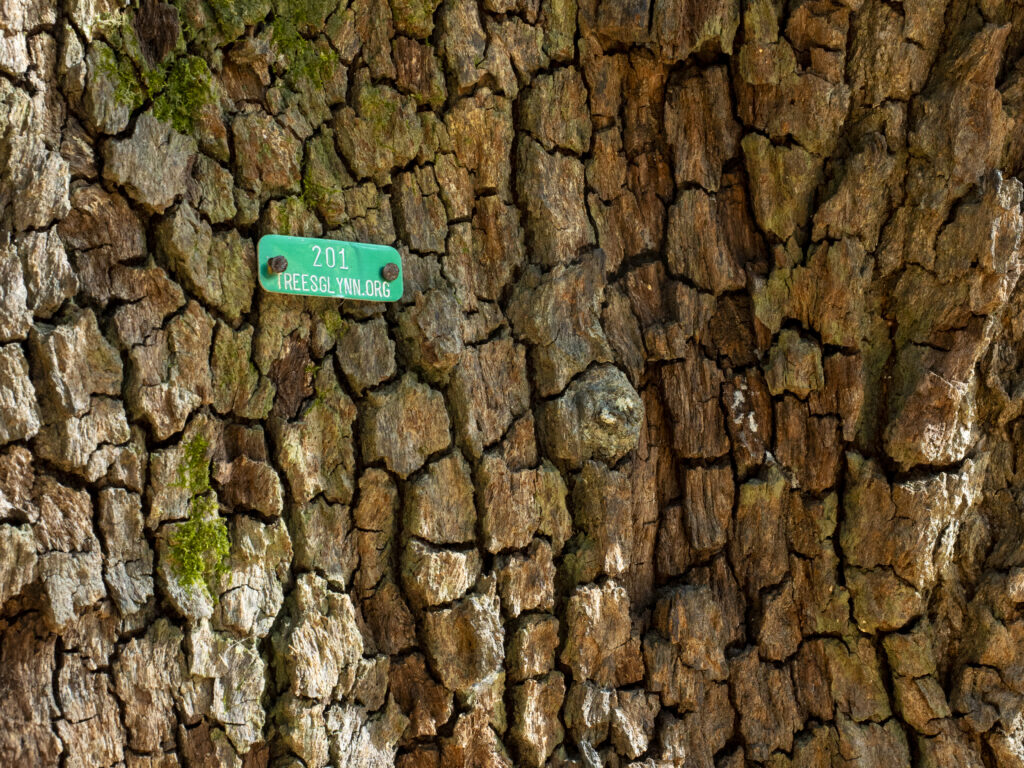
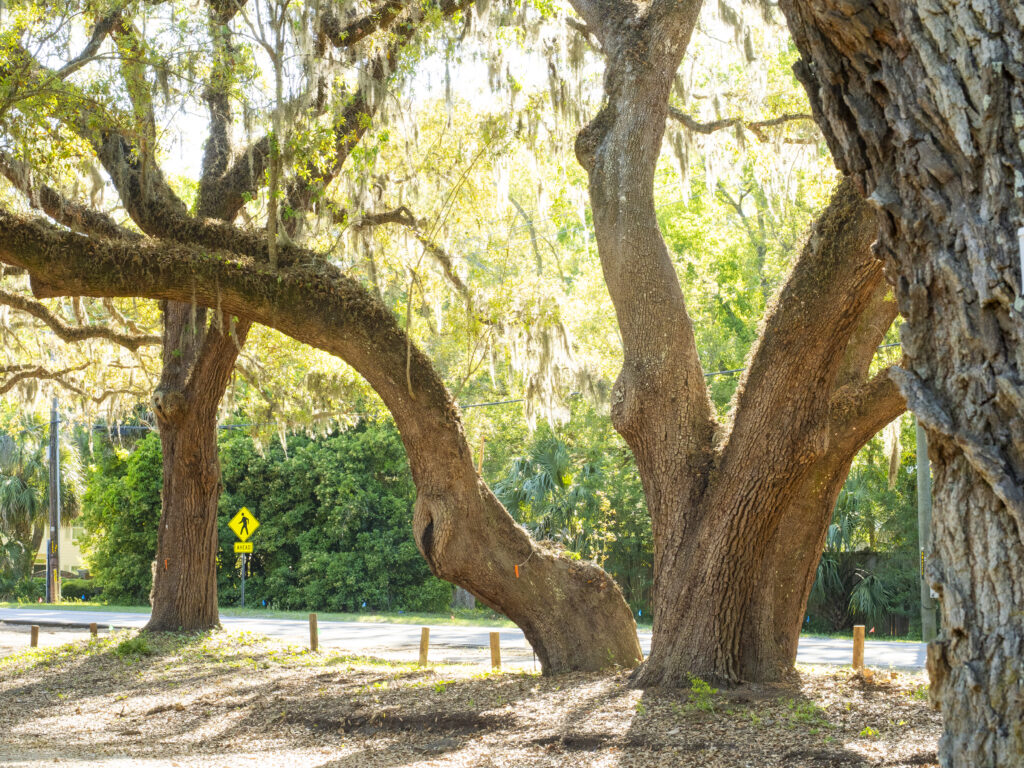
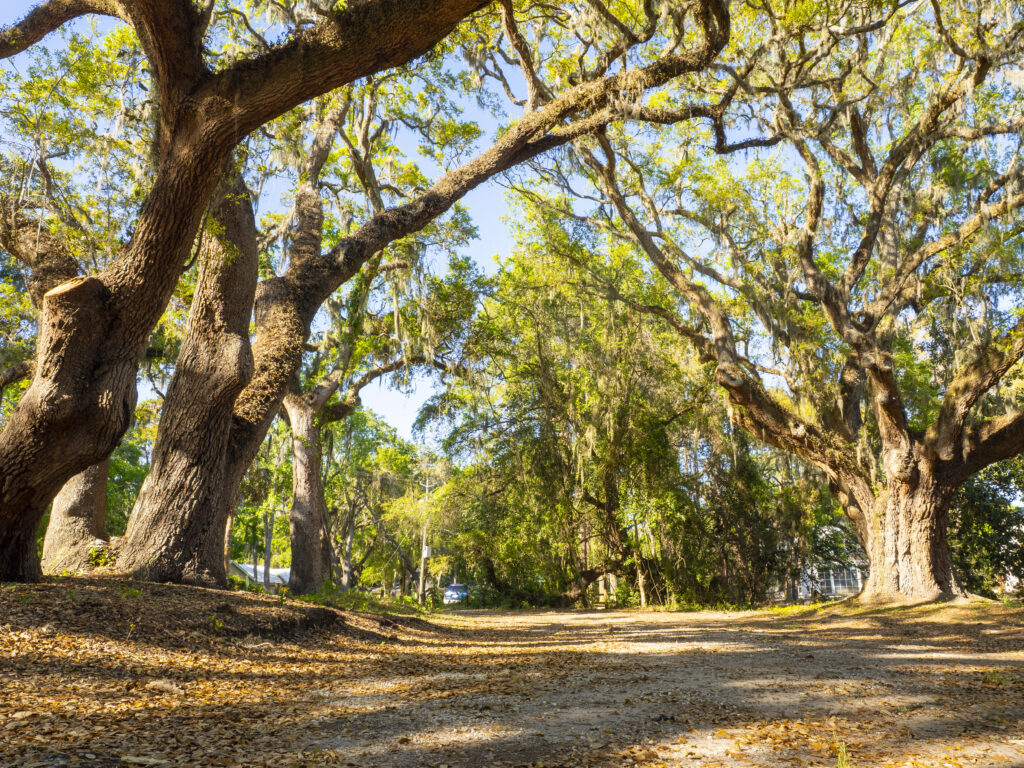
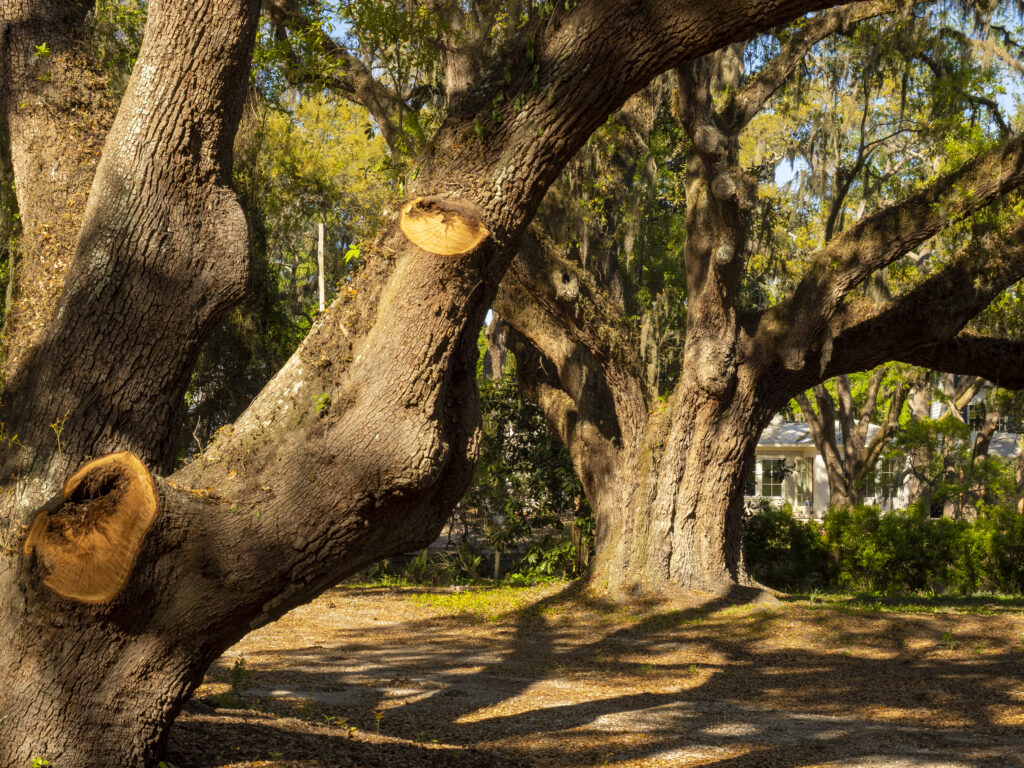
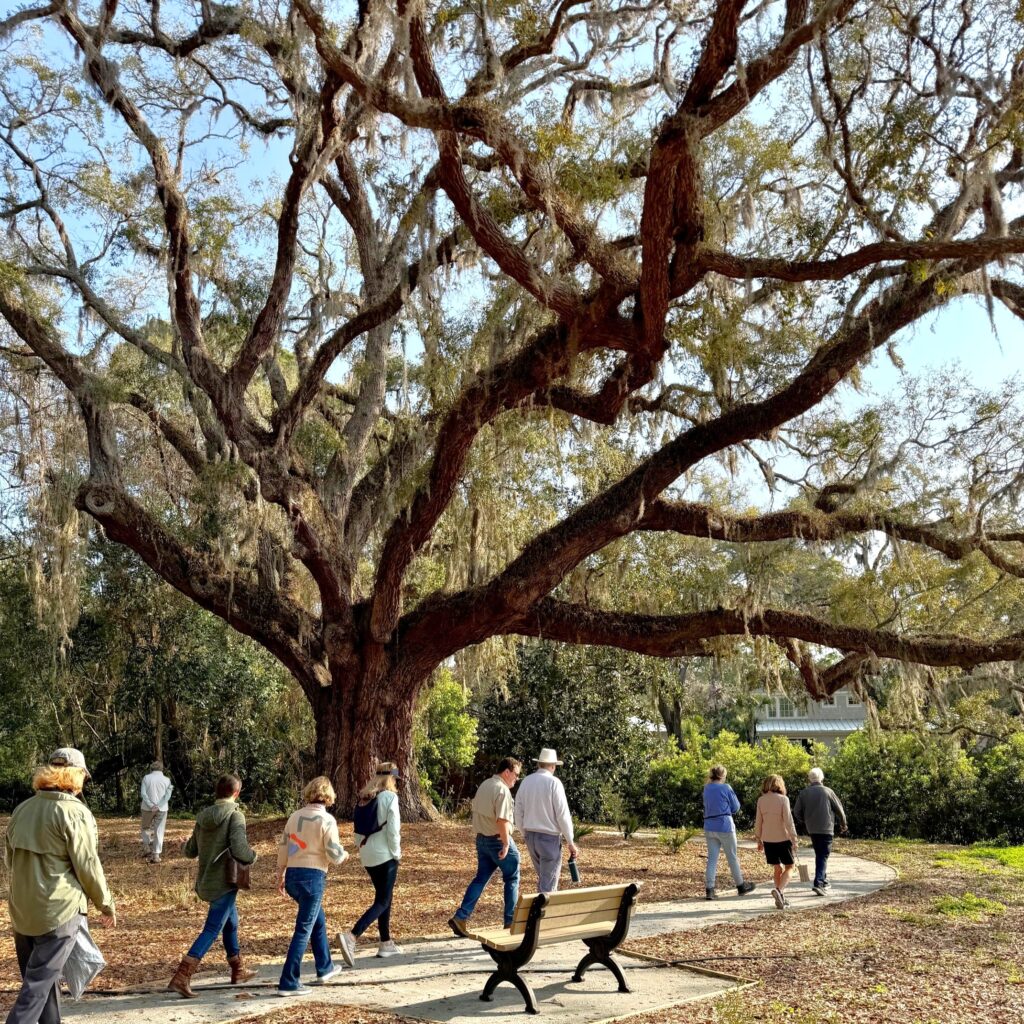
The Old Ironsides Property contains seven (7) large live oak trees, including one named “Old Ironsides” which is a 300-year-old specimen registered with the Louisiana Garden Club, Inc. Live Oak Society. The property is immediately adjacent to the publicly accessible bike path that runs almost the entire length of Frederica Road, which runs north to south through the middle of the island. It is just south of John Gilbert Nature Trail, the Land Trust’s most popular property.
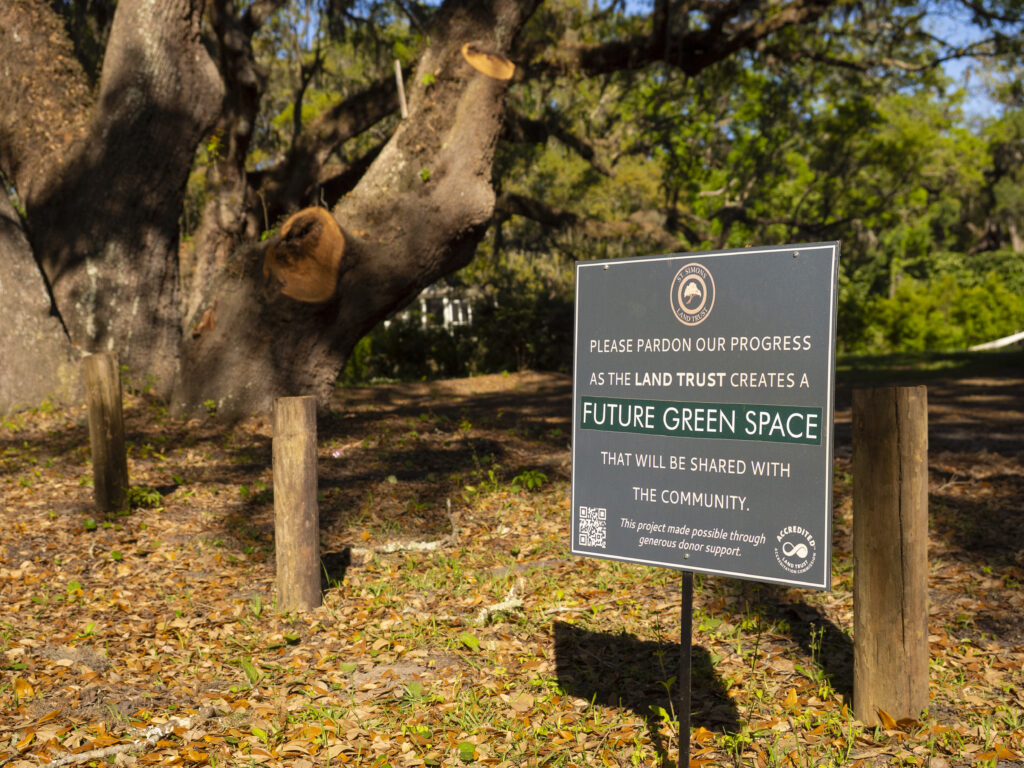
The Land Trust has replanted the property with a variety of native plants that enhance its ecological significance and provide an example of both the functionality and beauty of native landscaping. Its primary conservation purpose is to provide protected habitat and enhance its environmental value.
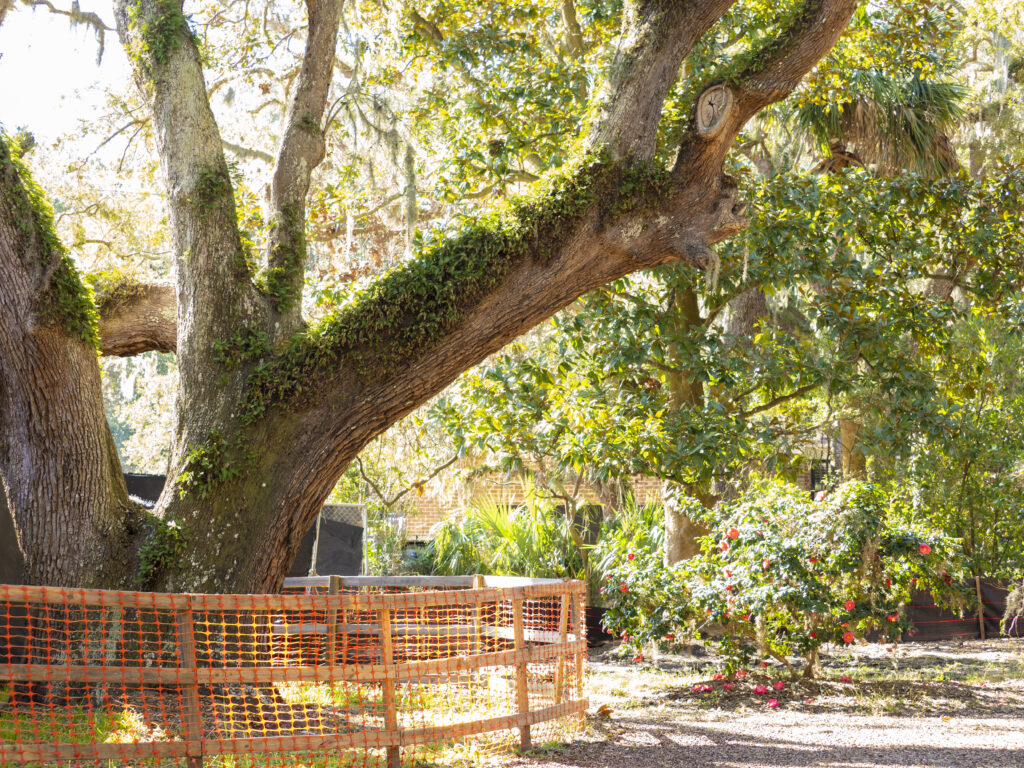
Our partners at Coastal Greenery transformed the Old Ironsides property into a landscape brimming with coastal grasses and other native plants, shrubs, and trees.
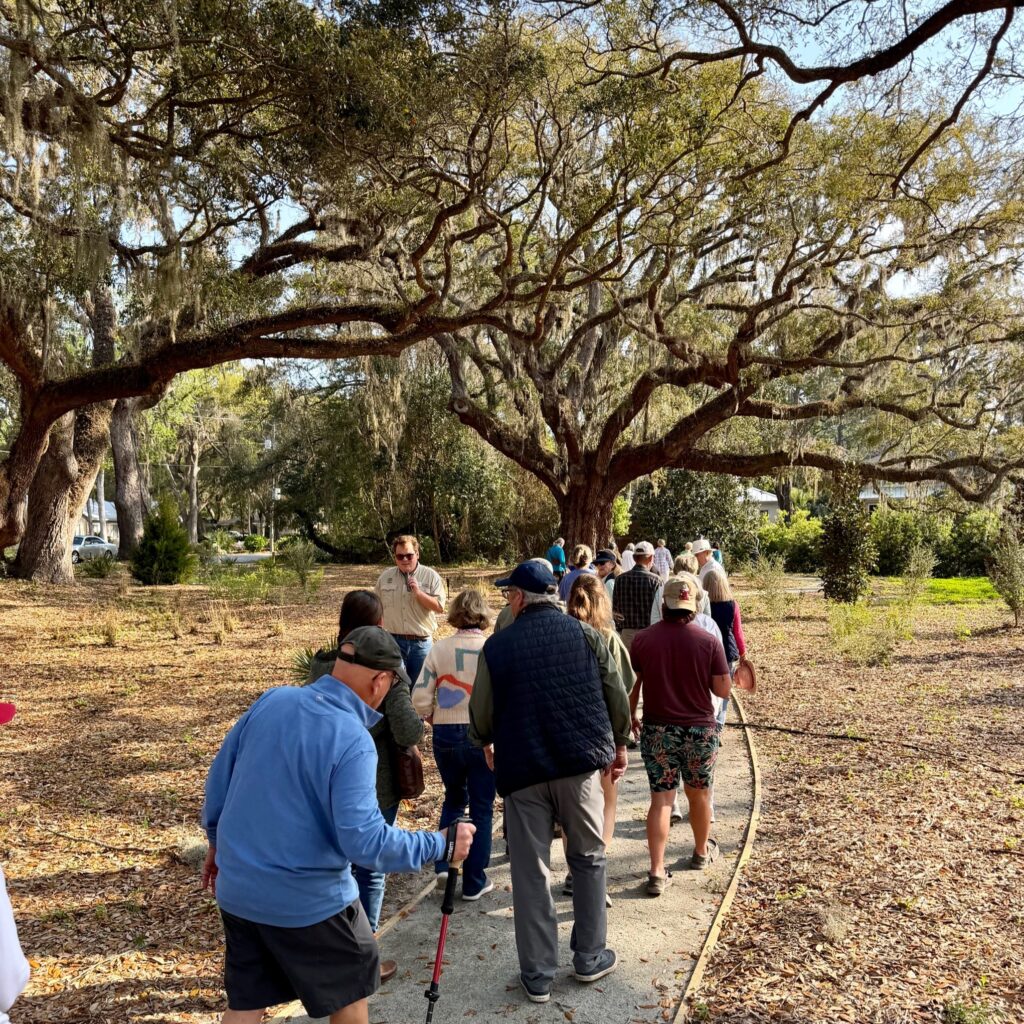
Designed by Thomas Angell at Verdant Enterprises this revitalization features a permeable path winding through the property, accompanied by inviting wooden benches where community members can pause, reflect, and connect with nature.
This enhancement was made possible by a bequest from Steve and Miranda Hires, Golden Isles Fund for Trees, and countless individual supporters.
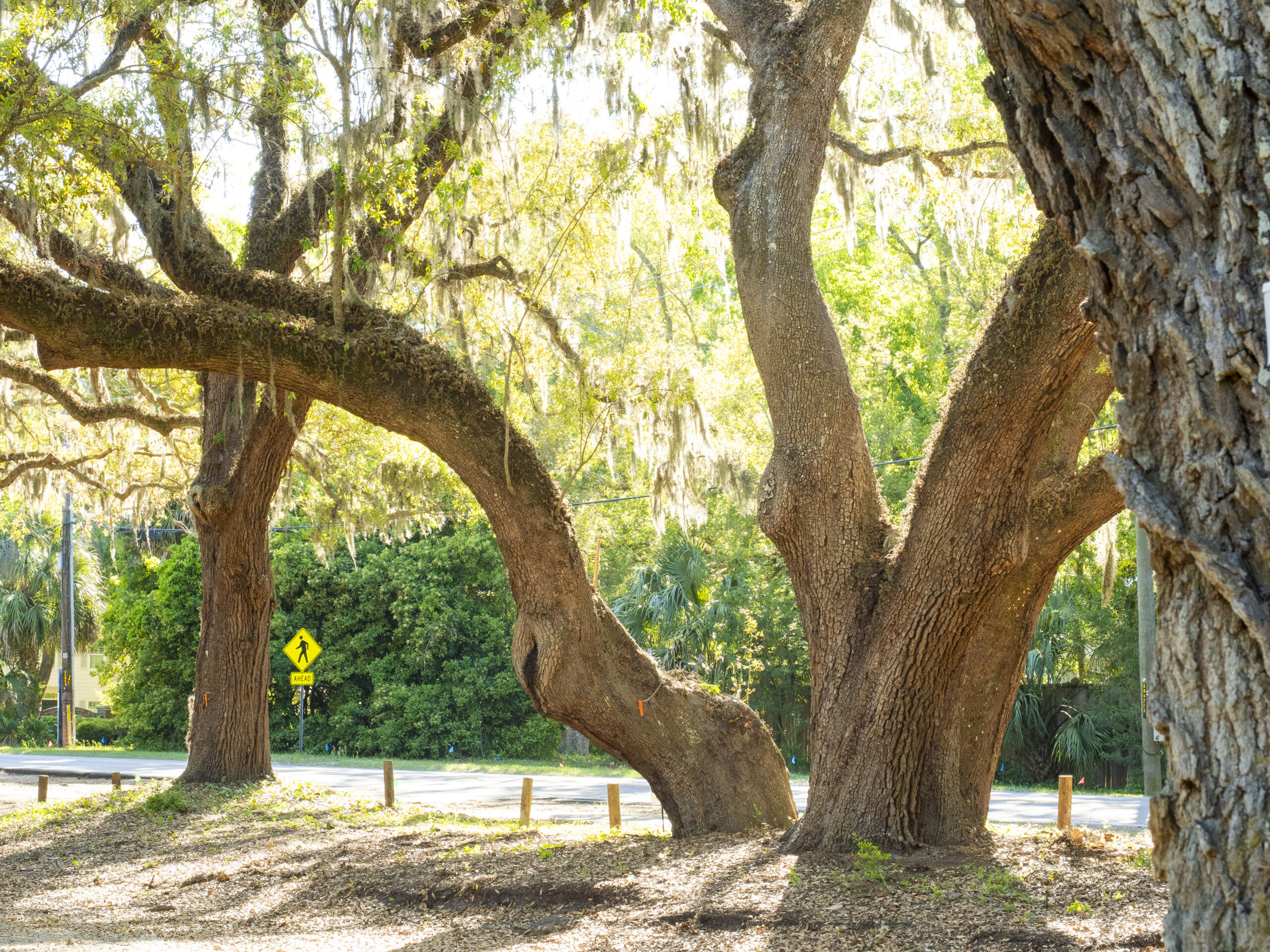
The protection of the Old Ironsides Property is an exciting and important piece in the Frederica Greenway extending from John Gilbert Nature Trail to the SSLT Offices at 1810 Frederica Road. The acquisition of this property in October 2024 reduced development by reducing the lot from having 3 homesites as a developer originally planned.
As with the entirety of St. Simons Island, this property was previously utilized by Native Americans up to 5,000 years ago. Native American tribes that would have been living and utilizing St. Simons include the Guale and Timucuan. The property was likely once a portion of the historic 6-mile long Military Road that extended from Fort Frederica, crossed today’s Frederica Road by Harrington, and continued along the marsh through today’s NPS Bloody Marsh site, ending at Fort St. Simons, where the lighthouse now stands. This property was presumably a portion of Black Banks, a plantation owned by James Gould, the builder and first keeper of the St. Simons Lighthouse.